Saturday, 4 August 2012

I was born, lucky me, in a land that I love


I've been looking over my first ever post, Where are you going, where have you been? and am struck by the fact that my feelings from then and now are so similar. (And that I didn't actually know what "liberal arts" means, but I pledged not to edit anything retrospectively.) You would think that with everything that's happened to me over the last two years, I would be a different person entirely. Or at the very least, that I would view my old words as naive - but I don't. Back in 2010, I was sad to say goodbye and worrying about how to handle depression abroad, but I was also very excited. It's pretty much how I feel now. The only big difference is that I have a greater understanding of my own weaknesses, and how these can be challenged in such a situation.

If ever I talk to people who haven't studied/lived abroad about the difficulties I experienced, a common reaction is that my expectations must have been too high, or that I made the wrong choices. By contrast, when I talk to those who have been abroad, even if their experience was 100x better than mine, they usually nod their heads and say, "That's how it goes sometimes." Don't get me wrong, there is a lot that I could have done better. This time around, I do want to be more assertive, more forgiving, more aware of how I'm feeling and what I can do about it. I understand my strengths a lot more now, too. But I also know that for any year in your life, regardless of setting, you can't be expected to control every single thing. Quite simply: shit happens. It might be that it takes me awhile to make friends, or to get into the swing of classes, or to adjust to the new climate. It might be that something goes horribly wrong. But no amount of preparation and/or panic is going to change that possibility, so I might as well focus on the excitement. My enthusiasm for my year abroad was certainly not what made it difficult; if anything, it was the reason I was able to keep going.

Obviously, the major difference between then and now is the fact that I'm leaving for two years, not one. It's also a more transient time than when I left before. The lives of my friends and family are going to change so much between now and May 2014. They'll be pursuing careers, moving houses, travelling the world, getting engaged. It would be an entirely different world for me to come back to. I've had to say a more permanent goodbye to the life that I knew, both in Norwich and St Albans. Strangely enough, that is easier. I don't have the burden of coming home and trying to fit back in again a year later, pushing aside these experiences that no one else witnessed. It's easier to believe I can make Oxford my new home in a way that I couldn't with Chapel Hill. I expect I will still feel lost at first. When you move elsewhere, sometimes you have to accept certain sacrifices. For me, it's some of my hobbies, such as fashion and cooking. In Mississippi, I can't live with one eye on the high street at all times, collecting limited edition clothing*, nor can I comfortably peruse Sainsbury's to make my usual dishes. I will have to adapt, and accept I can't always get hold of Quorn or creme fraiche. These are little things, but I'm sure they will sometimes make me sigh. I'm not sure it's possible to ever feel as comfortable in a foreign country as the place where you grew up.

*I'm a proud owner of a Queen's Guard crop top, a Jubilee-themed Topshop item. It's a real wonder that I actually resisted the Corgi-patterned bags.

When my visa-approved passport was returned to me last week, my nana was surprised to see that I don't have an Irish passport. It would never occur to me to get one, since I have never lived in Ireland and my dad's side is predominantly English. She asked, "But do you feel Irish?" I thought about this for a moment before replying, "I do on St. Patrick's Day." It does go a little deeper than that. I love visiting Ireland, and knowing that people I love grew up there, saw these places every day. I have a lot of childhood memories that tie me to the country, even little things like the food I begged for and the music I heard there. I wear a Claddagh ring, a gift from my nana. I thought seriously about applying to Trinity College. Yet to be honest, my relationship with Ireland is almost no different to my relationship with the South. I love Southern food, Southern literature, Southern music. I feel like I have an understanding of the culture without being truly part of it. It's somewhere I would be excited to live. There's no rhyme or reason to me attaching myself to it in such a way, it just happened.

What does it means to "come from" a country or town - is it your heritage, where you lived as a child, where you move to as an adult? I've been meditating on this a lot recently, perhaps due to the number of patriotic events this year. Some people are dismissive of the idea that one can be proud to be from somewhere, as it's really only an accident of birth. Other people hold tightly to their nationality, whether it's somewhere they can barely remember or where they grew up all along. The other day I met up with Tash, who was the first friend I made at UEA. Whilst I grew up only a short train ride from London, Tash grew up 5 hours away, in Devon. We walked along the Thames, thronged by Olympics tourists, and both felt that in some way, this capital was truly ours and something to be proud of. I'm not going all Colonialist on you - I offer no intelligent comments on Britain's history, and I don't view my birthplace as an achievement of some kind. But I am grateful for the way my country shaped me. As the Olympics opening ceremony demonstrated, Britain is a country that values art, humour and compassion. Who I am now, as a person and as a writer, is largely the result of that.

For instance, I would probably not have encountered the same television and writing. Many people know how much I admire Michael Palin. I'm a huge fan of Monty Python, and he was always my favourite. I used to rewind the Biggus Dickus scene of Life of Brian. I love his travel shows and his books. Now, everyone and their parrot just likes to discuss how Palin is so "nice", which is actually not why I am drawn to his work. Obviously, he is a talented writer and actor, and his journeys fuelled my own interest in travel. But mainly it is the fact that he appears to be someone who is comfortable with the fact that life does not have hard and fast answers. He doesn't aim to conclude, and he lives his life with empathy. (I shudder when I say "empathy" now, thanks to my dissertation!) When I read his work or his interviews, I feel a sense of peace, even if my life is currently all over the place. Last week, I read an interview with him in the Independent. He made a comment about John Cleese which resonated with me:
"I think he set himself a very high standard of achievement and possibly feels he never quite attained it. He's always moving: first to New York, then to California, now Monaco. Where next? I always wanted to say to him: 'John, you're so talented. You have a lovely wife and kids; just relax.' But there was always something more that he wanted, to a point that was almost destructive."
"Just relax" is my new mantra. I worry so much. Every day I wake up asking myself if I'm good enough, in my relationships and in my pursuits. If I may say so, I have inherited the British tradition of apologising for everything, which means it's hard to congratulate yourself. Being awarded a scholarship is one of the biggest things that's ever happened to me. You would think that I spent every day since January being overjoyed, proud of myself, successful. But I've been taught modesty all my life, and sometimes that drifts accidentally into self-consciousness. In some ways it's easier to process failure than it is to know what to do with success. I think it's how most people would feel, actually. My inclination to deconstruct and understand is in many ways a good quality, but sometimes it does need to be ignored and replaced swiftly with a "just relax."

I was caught on camera the other day as I was considering all of this. I have no idea what it was for, but I was amused that the footage, shot so randomly, would be rather poignant to me. I had taken the familiar train journey from St Albans to Kings Cross-St Pancras, and sat down outside the station. I was dressed in Topshop and Miss Selfridge, my iPod in and playing the Kinks. As I waited for Tash's train to arrive from Norwich, I continued reading Faulkner's The Wild Palms. At some point I paused, thinking about the upcoming move, my tendency to agonise, and how I should "just relax". I glanced up, squinting into the sunlight, and noticed the camera pointed right at me. The person holding it couldn't possibly have known, but what they recorded was a moment which connected me to all the places I've lived, the person I've been in all of them, and the place and person I'm now going towards.

I also like to express myself with cake.

Saturday, 7 July 2012

You are high school to me. All of the boyfriends and mean girls and tests and teachers and our CRAZY mothers – we went through it together. We raised each other.

Some people get tattoos, I get stuffed animals.
Hello there. I have the feeling this is one of the harder posts I will have to write in here (yes, even worse than that one about mysterious bug bites). You see, in 2 weeks' time I will a) have graduated from UEA and b) be having my visa interview for Ole Miss. This means I need to start acknowledging the fact that I am not going back to UEA. Which I really do not want to do. I'm going to write about my UEA journey for me, and for you. For you if you were a part of it, as a friend or a tutor or a bunny bouncing around the grounds. For you if you are starting UEA this year, half-way through your degree, or thinking of applying (go apply for American Studies at UEA right now). I would do it all again if I could.

UEA has been an enormous part of my life for the past 4 years of course, but actually it's been even longer than that; I first went to an open day in 2006. So far, I had been somewhat bemused by the process of applying to university. I had checked out a couple of places, vaguely thinking that I wanted to do something literature based but not really sure what that would mean. UEA appealed to me at first because of its reputation for creative writing, and I have always wanted to be an author. However, I ended up at an American Studies talk. It felt like a more adventurous choice, and that was what I wanted.

As a side note, I am actually glad that I didn't end up doing a creative writing course. I know that for many people, it is a wonderful experience and helps them to become better writers. But it is not the only route. At UEA, I was part of the Creative Writing Society, I wrote a lot in my spare time, and I took a couple of classes (one at UEA, one at UNC) without it being my degree title. When I moved back in with my parents recently, I went through my old stuff, including sketch books. I had forgotten how much I had loved art, had even once wanted to be an illustrator as well as author. Don't laugh, but GCSE Art burned me out. Being graded according to a syllabus just wasn't for me, especially as I don't have a lot of range. I liked art history, adored drawing, could be persuaded into painting, but hated sculpture with a passion. I was a lot happier when I was left to play around by myself. I know that if I ever wish to be published I may have to approach my writing differently, but for this period of my life it was the right decision to keep it as a beloved hobby.

Anyway, back to this American Studies talk. The speaker was Professor Christopher Bigsby, who would later be my teacher for Early 20th Century Novels in America. (I probably took it to talk about Faulkner more, and because it was in the Arthur Miller room. Two words, people: leather armchairs.) I couldn't tell you everything that was said in that meeting five and half years ago. I can tell you that I walked out of it, across campus with my parents, and said, "I am going here and I am doing American & English Literature." I have never been so sure of a decision in my life. I had a few obstacles, namely my difficult relationship with exams. I had to do a number of retakes in order to get the grades I needed. But I was absolutely determined, and after a gap year of travel and work I moved to Norwich to begin my new life.

My first year was all about pranks and ridiculousness in Suffolk Terrace (the "Naked Flat" had quite a reputation), worrying about my essays and making lots of new friends. UEA quickly became my home, and my friends were my family. My second year was a blur between running Creative Writing Society, going to the LCR a lot, working at Starbucks, applying for my year abroad and pushing myself as hard as ever with my essays and exams. I'm still never quite sure how I managed it all. My third year was my year abroad in North Carolina, and I crashed. I suppose it had been a long time coming. I was lonely, scared, mosquito-bitten and often depressed. Painful as it was, the result of that year was lasting friendship, love, travel and self-belief. My fourth year was a time to heal. When I first returned to the UK, I still suffered from insomnia, found it difficult to talk to anyone, and was struggling to leave the past in the past. I felt better than I had done, but I was still lost. Or so I thought. After gaining weight abroad, I got into better shape than I ever have been. I wrote a few short stories that I'm proud of. My dissertation was marked as a First, and it led to my interview with BAAS and now my Master's in Mississippi. A lot happened between my first day in Norwich and the last, but I got my happy ending for sure.

As my description probably implies, my social life was an important part of my time at UEA. I was lucky enough to be placed in a first year flat which, for the most part, stuck together. I still count several of those flatmates as close friends. In fact, many of the friends I made at UEA I actually met the first week that I started, in my seminars or societies. I also struck gold with my part time job at Starbucks. Many people despise their part time jobs, but I didn't. It was a gift for me to have somewhere else to be other than campus or home (especially when our heating broke), to meet people who were not at UEA, and to have days where I was a barista, not a student. Then there was the Creative Writing Society. It was such a privilege to be a part of it, especially as Secretary. I don't think I have ever laughed more than I did at those workshops, even when I was the one running them and should probably have been a little more focused. I actually took a few of my workshop plans to my BAAS interview because I felt they showed a side to me that essays alone could not. Of course, the final two years of university were definitely not as social as the first two, after I left then came back. It was very hard to adjust. But I'm glad that I had to. As much as I value my friendships, I'm glad that I'm setting off to graduate school with the confidence to do things alone. I write stories without anyone to workshop them, I go for runs by myself, and I'm much better at listening to my own heart.

I'm going to go ahead and state the blatantly obvious: university is hard. I don't know anyone who sailed right through 3 years or more without making mistakes. I don't know anyone who didn't suffer from circumstances outside of their control. It's why I am so glad to have done it all at two amazing universities. Without the truly incredible faculties at both UEA and UNC, I would not have got through my degree. I would have run right back to St Albans and stayed there the rest of my life. On top of every other pressure at uni, the last things you want are to feel like your course is boring and that there's no one there to help. I never, ever felt like that. I enjoyed every module I took at UEA, from the American Body to American Music to Tales of the Jazz Age. I always felt like I had support academically, and even emotionally. I needed a lot of encouragement, and I got it. At my interview for the BAAS award, they asked me to describe times in which I had been the recipient of good teaching. I had so many examples to choose from that I had to pause and think. I sincerely hope that the experience I had at UEA will make me a good teaching assistant at Ole Miss.

So, now that I have moped my way to the 8th paragraph, I hope everyone can see that I did quite like UEA. I remember the first time I visited campus, when I was still in sixth form and spent all of my time daydreaming (I've outgrown that nasty habit, obviously). I wondered what I would be like by the end of four years there. I am happy to say that, imaginative as I was, I have far surpassed my own expectations. My life is bigger and brighter than I ever believed it could be. So thank you, UEA, and keep doing what you're doing. I'll miss you every day.


Fresh and cute as first years - September 2008.

So mature that we irritated the bar staff trying to take this picture about 8 times - June 2012.

Thursday, 22 March 2012

"Is he in therapy?" "Nah, he's got me."


I wasn’t planning to write again until next month, when I am once again going to San Francisco followed by the BAAS conference/banquet in Manchester. However, I recently attended a meeting for outgoing year abroad students which inspired me to write this entry. Dr Rachael McLennan asked me to come so that I could talk about my year abroad experiences and how they informed my dissertation and led to my scholarship. As I sat there, it suddenly dawned on me that all the advice being given was still relevant to me, since… I am going abroad this summer too! I know – I should really try to remember that. Anyway, I wanted to write about what I wish I had known whilst I was abroad in case it is useful for anyone else. I also think it will be useful for me.

I had so many intentions before I left for Carolina, but once I got there my motivation dwindled and I mostly stewed in my homesickness and frustration. I don’t want to make the same mistakes again. I’d like to think that it will all just be easier this time and shrug it off, but if I have learnt anything from my year abroad, it’s that self-awareness is your best friend. I can’t know or prepare for everything that’s to come, and I wouldn’t want to anyway. Oxford is the next adventure for me, and my excitement far exceeds my anxiety. Part of taking a big risk like that is accepting that you’re going to be in freefall. Even so, I hope that my previous experiences will be beneficial (to anyone else, too, if you are reading!).

As you will glean from the structure of my points, I don’t believe in hard and fast rules, but about trying to create a healthy balance. Here are some of my best lessons…

Be Proactive and Assertive
I think at UEA we are lucky to have so many open societies which actively look for more members. I found that UNC was more of a puzzle, and I didn’t have much luck joining anything or finding out about events. Despite the early disappointments, I really wish I had kept trying. I wish I had seen more plays, attended more campus events, explored new places – even if I had to go by myself. I was so used to being part of a group at UEA that I never learned just to go and enjoy something on my own. It’s an important skill and it will stop you from missing out. Out of my comfort zone, I also became more reserved. I stood in my own way when it came to making friends and wasn’t assertive enough; consequently it took me a long time to make them. Don’t allow yourself to stop trying if it doesn’t go your way at first. Keep going. Push yourself.

BUT Take Care of Yourself
Sometimes it’s okay to just watch One Tree Hill in your bed (especially if you’re in North Carolina, then it’s practically research). Really. Don’t feel like you have to do everything if you don’t feel like it. I routinely tortured myself about everything I was missing out on, and it was pointless to put so much pressure on myself. When I look back, I realise that I do have a lot of good memories, even if they were just hanging out with my friends and not doing anything “significant”. Not every day is going to be exciting or even pleasant at all, and that’s okay. Being somewhere new is incredibly stimulating, but it’s also overwhelming. I wish I had been easier on myself, and done more to feel good. I would definitely recommend taking advantage of the free gyms, different sports/exercise opportunities etc. I really regret not taking up running in Chapel Hill, since it’s a beautiful area and it would have kept me healthier. (Better late than never, though – and Norwich is beautiful to run around too!) Also, reign yourself in when it comes to the food. I’m not just talking about weight gain (though that was a definite part of my year abroad), but about the fact that there can be a lot of additives etc which your body is not used to, and it can make you unwell. Also, be careful with alcohol. It’s all very well to have a good time, but you’re much more vulnerable in a new place with new people.

Communicate with Others
It’s great meeting new people, but sometimes you will just want to hear a familiar voice. I was a Skype and Facebook addict the entire year, and for the most part I loved hearing what was going on at home. I wanted to stay connected to my life in Norwich. It’s important to have encouragement from the people who know you best. It’s also important to be open with the people around you. Ask your new friends, your professors, etc, to help you out if you are struggling. I was often far too stubborn for my own good, and did not want to admit how much I needed other people to help me, or to make a change in my situation. I could probably have avoided a lot of pain and drama if I had spoken up earlier about what was going on with me, or accepted the olive branches being offered. It’s also really important to talk to people who have been through the same, whether that’s people at your university who have studied abroad, other international students, or friends from home who have done American Studies or similar. (Here I feel I should say a big thank you to Ailsa Bristow!)

BUT Listen to Yourself
I’ve just admitted that I’m stubborn, but conversely I was a victim of listening to other people too much. When I was having trouble at UNC, I found that a lot of people were (unintentionally, I’m sure) dismissive about how hard it was. When you have never lived abroad, it is completely impossible to truly comprehend how isolating and lonely it can be. Some of my isolation was most definitely my own doing, but a lot of it was out of my control. When you are struggling, it only makes it worse to have someone tell you that it’s not a big deal or that you’re just not trying hard enough. What is even worse than that is to believe it yourself. Be honest with yourself, and try hard, but don’t blame yourself if everything isn’t perfect. The other point I want to make here is how important it is to pay attention to your own needs. I think if I had had the courage to make decisions just for myself, and not worried about what other people would say about it, I would have been much happier. Sometimes it is not selfish or arrogant to decide that you know best, it’s just the truth.

Document Your Experiences
Takes photos, keep a journal, keep a blog (hi), make a box of keepsakes. It’s a good idea to carry your camera around with you, even just to take pictures as you walk around campus. I loved writing this blog. It forced me to have a sense of humour even when all I wanted to do was cry and book a flight home. I’ve written a journal most of my life (regularly for 10 years now), and I think it’s an excellent way to appreciate the little things in life, and to hold yourself accountable to mistakes. When I read back on my personal journal, it’s a little painful to see how much I struggled sometimes, but it also tells the most outrageous stories. The most dramatic of those were from my month of travelling around with Jess and Faye. I have many photos from our trip that I cherish and look over every time I need a laugh. Though it may not feel like it at the beginning, the year goes by very fast, and it’s important to preserve the memories as best you can. As was mentioned in the meeting, something like a blog may come in handy later when you’re applying for jobs. The biggest benefit to me was being able to write something that a lot of people were interested in reading – it actually put me back in touch with old school friends who had followed the links on Facebook. I’m intending to be a more regular blogger when I go to Mississippi.

BUT Remember Your Life is Not a Movie
I said already that I was a Facebook addict. I know it is a double-edged sword. Photos, communication, information, humour = good. Stalking, jealousy, wallowing, grammar atrocities = bad. I was so worried about what people thought of me at home, falling from my social/academic grace abroad, that I became obsessed with how I appeared on Facebook. I haven’t changed my profile picture in two months – are people talking about how I must not have any friends? Was that last status funny, or a little too whiny? WHY IS THAT PERSON HAVING SO MUCH MORE FUN THAN ME? Try to remember that Facebook is not a true reflection of reality. Also, whilst I mentioned that photos/journals are important, the best moments I experienced abroad were not photographed, blogged about, or shared on Facebook. University is an incredibly social experience, and I was so bound up in that at UEA. At Carolina, I truly learned to be comfortable by myself. My most vivid memories are of private moments in which I got closer to a friend, finally felt like I could do Zumba, or finished a particularly challenging project. I didn’t need to stop and take a photo in order to remember it.

Congratulate Yourself
This is probably one of the hardest things you will ever do. Well done for considering it, well done for taking the plunge, well done for staying where you are, well done for making the most of it, well done for coming home a better person. Applaud yourself every day!

BUT Say Thank You
I have to admit, I was not always as grateful as I should have been. I was so consumed in my own unhappiness at points that I did not take enough time to say thank you. I hope that by the end of my time I was a lot better at expressing my gratitude to all the wonderful people that supported me. Part of the reason why I chose to write my dissertation on empathy is because I realised just how important it is. It is because of the people that took the time to listen and to understand that I was able to keep going, to make sense of the difficulties, and to trust that things would get better.

And now for the most important tip of all…

For God’s sake, apply insect repellent.

Good luck to everyone going abroad this summer!

There's not a lot of reason to this other than the fact that I love Obama. And he has great facial expressions.
ETA: So I just discovered that you can look up stats to see how many people are reading. I have had far more people stumble across this blog than I expected! I know that some probably got here by mistake or clicked back immediately (especially if all you saw was the pic of my bug bites - sorry!) but if you do read this blog, please leave a comment to let me know! Sometimes people email me or comment on my Facebook but it would be great to get comments here, too, just to know what your thoughts are, if you've had similar experiences, etc. Once I'm back in the States I would really love suggestions for what to write about. :) /end vanity.

Monday, 16 January 2012

My, my. A body does get around.

Hello neglected blog! I was planning to write an entry following the completion of my dissertation, but that rolled into my trip to San Francisco, and that rolled into my interview for a BAAS Graduate Assistantship position... And now, you see, I have several exciting things to talk about. Firstly, I wanted to talk about my dissertation. A lot of people have asked me what it's about, and when I say, "William Faulkner and empathy" the follow up is a blank look. Despite the length of time that I've spent on it, it's actually difficult for me to condense it into a soundbite. I therefore thought it would be more interesting if, rather than attempting to demonstrate my whole argument, I mixed it in with why Faulkner appeals to me and how my ideas developed over the last year. This fits in nicely to everything else I have to say, too.

My dissertation is closely linked to my time at UNC. When I first began researching back in January, I was a mess. I hadn't made many friends, didn't feel like I was fitting in, and was struggling to be positive about my experiences. Despite this, I was excited to get started with my dissertation. Faulkner was already one of my favourite authors, and since I was in the South I thought it was best to stick with a Southern author. Now, a lot of people don't like Faulkner at all. I have to admit that I can't understand this. His work is challenging for sure, but I've never found it to be boring or incomprehensible. Usually I discount the first reading as a time to enjoy his use of language and "hear" the dialogue of his characters, and worry about making sense of it later. I really cannot be effusive enough about how much I love his work, it's a reading experience unlike any other. My first time reading Faulkner was my first year at UEA. I remember reading As I Lay Dying in the launderette, sitting there far beyond the time that it took my laundry to finish because I was so engrossed. I fell in love quickly, and pursued my interest in the South all through my second year. I wrote about Rockabilly, Sarah Dessen, and back to Faulkner again with The Sound and the Fury. I prepared to move to North Carolina.

I probably shouldn't admit this, but my lightning bolt moment came when I was supposed to be listening to my professor. It was the last 5 minutes of class, she was assigning us homework, and I was mulling over my increasing frustration with feeling misunderstood by those around me. I asked myself what was missing, and the word "empathy" jumped out at me. It was a relief to put a word to my struggles, and a moment later I found myself realising that that was a big part of why Faulkner was so special to me. Class ended, I sped out of Greenlaw and over to Davis Library. Tommy Nixon, a research librarian at Davis, was kind enough to talk to me for a whole hour about what he thought of Faulkner. We didn't go into great detail about empathy exactly, as I had a lot of specific research ahead of me, but my conversation with him made me sure that I was on to something great. After finishing my studies at UNC I travelled to Oxford, Mississippi, where Faulkner lived and wrote. I walked around the University of Mississippi, the town square, and Rowan Oak, Faulkner's house. It was an incredible experience for me to see firsthand where he sat and wrote on his typewriter, where he scribbled story notes all along the wall of his study (I'm not alone!), the trees he walked beneath to get to his front door. It was more than pure fascination: I felt like I had seen a piece of Faulkner the man, and it gave me confidence that I understood him, and his writing, well enough to attempt my dissertation.

Frolicking in front of Rowan Oak, June 2011

As I have already written, coming home was a difficult step for me too. I was getting my life back together after so many problems, but I had to make peace with the mistakes and hardships of my year abroad. My dissertation was the perfect project to get me through. I read John T. Matthews's Seeing Through The South (I recommend!), and came to understand the extent to which Faulkner was haunted by the past and nervous about the future. He had a vivid imagination, valued his privacy, and wanted to understand others without giving too much away about himself. He could be hilariously obstinate towards reporters, and I was constantly finding the most biting, witty interview remarks. My dissertation traced the evolution of "empathy" from a concept related to aesthetics ("feeling into" works of art), to psychology (understanding others' mental states) and to morality (to what extent we are obliged to help if we understand). I applied this to three themes of Faulkner's works in three separate novels. "Empathy and Trauma in As I Lay Dying" considered the use of form and symbolism for encouraging readership empathy for the Bundren family's trauma. "Empathy and Gender in The Sound and the Fury" examined how failing to understand each other and meet gender expectations within the family caused the downfall of the Compsons. "Empathy and the Community in Light in August" looked at outsiders vs. insiders, individual vs. community, and how Faulkner saw a society as so connected yet so fragile without empathetic action. It was a pleasure to work with my supervisor, Dr Tom Smith, who gave me such helpful guidance and politely ignored my moments of hysteria.

During the last month of my dissertation, I discovered the British Association of American Studies. I was checking out my options for going back to work in America, and one of my friends mentioned Kirsty Callaghan, a UEA graduate who was studying in the US. As many of you know I am the ultimate social network stalker, so of course I found Kirsty's Twitter and got in touch to ask about the award. I searched on Google myself, which is when I found one of the options for this year, the MA Graduate Teaching Assistantship in Southern Studies, University of Mississippi. Need you hear more? I am a Southern culture obsessive, especially when it comes to food and music, and this would be in the very town that Faulkner lived. Not only would it mean a Masters, but the opportunity to teach and even apply for an internship. So it may surprise you to hear that my first reaction was to say No. I read it through, just barely gave myself time to imagine it, then shut the window and just thought No. I said to myself that the deadline was too soon, I needed to take time out after my degree, I couldn't possibly study abroad again. However, I found myself still thinking about it afterwards, and I couldn't help but mention it to people over the next day. I even said, "I wish I could apply for this." When no one looked at me with comprehension, but with utter bewilderment, I realised I was standing in my own way and had no good reason not to at least apply. So I hurriedly asked for references, requested transcripts and wrote a personal statement. I looked at my stack of Faulkner novels, and asked him to love me back.

Before Christmas, I was invited to interview for the position on January 14th at Keele University. Slight hiccup - I was due to be getting back from America that morning, and could never make it in time. A couple of phonecalls and a depressing amount of money later I was booked onto an earlier flight. I tortured myself with practice interview questions in my head, but otherwise enjoyed Christmas with my family. It was lovely to be at home with them this year after missing last year's, despite how wonderful that was too. Naturally I got disgustingly ill in time for the new year, and opted instead to drink tea and go to bed early. I didn't sleep well for three nights in a row, and by the day of my flight I was definitely someone you'd avoid on the bus. Unfortunately those next to me for 10 hours on the plane didn't have that luxury. So there I was, with a cold, cough and sore throat, my head pounding and the repeated thought of You are going to die! You are most definitely GOING TO DIE! as is standard for every flight I have to go on. It sucks that I love to travel but am still terrified of flying. 5 hours into the flight I was feeling very hot and sick so I got up to go to the bathroom. I then fainted in the aisle, and woke up with about four stewardesses grouped around me. They gave me water and an oxygen mask and I tried my best to be amused/keep my eyes away from the emergency door. Despite the journey, my trip to San Francisco was absolutely perfect. I ate Kahlua cheesecake, spent a day in Golden Gate Park, watched an adorable pug in Dolores Park, bought a sequin trapper hat from Forever21, watched the Tar Heels win twice, drank a couple of IPAs and most importantly spent time with my favourite Southern gentleman. (Yes, someone does come before Faulkner.)

Why do I always encounter the police on my travels? Golden Gate Park, San Francisco

I was well-prepared for my interview and was therefore uncharacteristically calm. Kirsty suggested bringing along a copy of my dissertation, so I did this along with a selection of Creative Writing Society workshop plans from my time as Secretary, essays relating to the South from UEA, and a couple of projects I did at UNC. I debated bringing along my short story, "Storms and Flurries", set in Charlotte, NC, which was published by What the Dickens? magazine, but I thought it might be inappropriate for the interview. Sadly they actually did express disappointment that I hadn't brought it along with everything else, but at least it is easy to find online! Anyway, I took the advice of my friends to remember that I was already qualified enough to get the interview, and to focus on demonstrating my personality. I felt a little flustered trying to explain my dissertation, but more confident once we talked more casually about the South and why it is so interesting. In some ways I was just so pleased to have got to that point. Just a year before, I had gone through some of the most horrendous moments of my life, and there I was sitting there discussing them honestly. More than anything, I am proud to say that I have made sense of the difficulties I experienced at UNC. I feel that not having had the perfect study abroad experience has actually strengthened me for later life. It gives me confidence that I will be an observant and understanding teacher, that I will persevere through academic challenges, that I will stand up for my own needs and aspirations. I said something to this effect in my interview, though of course with about 23% of the eloquence.

Honestly, it was just nice to get to discuss all of my work and have three accomplished people be interested in what I had to say. Whether I had got it or not, I felt pleased with everything I had achieved, and very much geared up for my final semester at UEA. My parents and I celebrated our Keele roadtrip with coffee and cupcakes then drove back to St Albans. I spent a lonely hour in my room unable to talk to anyone or read anything because I was waiting for the phonecall. When it got to 5pm, I told myself sternly that I hadn't got it and that was that. Who needs academia when you can bake cupcakes and write about people sleeping with their housemate's girlfriend! (Watch out for my next short story, "Gooseberry Pie".) At 5.30pm I got a phonecall to tell me that they would like to offer me the position. I know that I said the word "wonderful" (I'm still British) and that it was difficult to listen to the rest because I was busy thinking Is this real? IS THIS ACTUALLY REAL? rather like whilst flying but altogether more pleasant. I nearly fell down the stairs, celebrated with champagne with my family (though we all paused to grimace after taking a sip; it was "matured" apparently), then called as many of my friends as I could to shriek and request that they come and visit me.

Finally I have had the perfect excuse to use my favourite Faulkner quote! I love it so much, because it perfectly sums up part of my personality and where it's lead me. In Light in August, Lena Groves pauses to consider how she has got all the way from Alabama to Mississippi and then on to Tennessee. Like Faulkner characters, I've always been obsessed with my own journey and past, mapping out where I started and how I got to this point in my life, imagining where I could go next. I mean it both literally and figuratively. I've always loved being abroad, though as a child it was usually Ireland or France. The best trips, obviously, were to America. We went to the East Coast when I was 8, and the West Coast when I was 12. I jumped at the chance to go to New York City at 16, and to travel several cities at 18. I lived there temporarily at 21, and will return again at 23. As I walked around San Francisco, a city I am completely in love with, I wondered if one day I would live there. Maybe. I still have 5 months of Norwich ahead of me, then 2 years of Oxford, Mississippi. Who knows where my reading and writing will take me next. My, my. A body does get around.

Jamestown, Virginia, August 1997

Wednesday, 28 September 2011

It’s a dream, but there’s a real world waiting

Skype me!
Poor blog. I did sort of abandon you (again). In my defence, I also keep a regular journal and travel journal, then there’s my short stories to think about. And Facebook and Twitter and texting and emails… It’s easy to get distracted. I think back to when I used to write as a kid and it seems so much easier without all the technology. Don’t get me wrong, I still typed everything out (though thankfully my early stories, which read as something like a Last of the Mohicans-Friends hybrid – I know, hard to think how that would work, most likely because it didn’t – have long since disappeared into the ether) but I tended to just write for hours and nothing else. So I am blaming the internet for distracting me from my internet journal.

Since my last entry, I descended into finals madness, complete with dreadlocking hair, terrible outfits and the inability to eat and sleep regularly. It was NOT pretty. The effort that students put in at Carolina is inspiring, but honestly, I’m so happy to slump back to UEA and know I only have to go in two days a week. I like the independence of UK education. Fewer contact hours does feel like we’re getting cheated in some ways, but I much prefer getting to structure my own days, choosing what books I’m going to read, what topics I’m going to write about, when my deadlines are going to be. Sometimes at UEA it can feel like I’m drifting into empty space, nothing obstructing me but nothing guiding me. Carolina just felt like a circus. However, I jumped through the last set of hoops and packed up my things, then got on a plane headed to New Orleans.

Where shit gets really crazy. I recommend taking up yoga before you go, so that you can practise your cleansing breath for the moment(s) you think you're about to die.

 I would LOVE to bore you with every single great story from my travels, but I know that this is never fun for anyone else so I will restrain. Instead, have a list of everywhere that I went: New Orleans, LA; Austin, TX; Denver, CO; Park City, UT; San Francisco, CA; Los Angeles, CA; Laguna Niguel, CA; Washington D.C; New York City, NY; Nashville, TN; Memphis, TN; Oxford, MS; Wilmington, NC. If you plan to travel the US or are heading towards any of these places any time soon please feel free to get in touch. If you want to know where to go I’m going to give a big thumbs up to Austin and San Francisco in particular, but on a previous trip I fell in love with Boston, too. If you have lots of money you need to get rid of please take me with you. You would think that after three holidays, a month of travel on Amtrak, and a year of studying and travelling in the US I would never want to see it again, or at least want to go somewhere else. But what can I say? Despite all its craziness, America is a wonderful place to be. Actually, that’s probably BECAUSE of its craziness. (“If U do not pray God will B angry and U will go 2 Hell where U will burn”, for example. What an inviting sign to have outside a church. Snaps for Wilmington!)

It’s funny, during my year abroad I would constantly worry about how I could possibly respond to people’s questions once I returned home. I learned so much, had great experiences, made lifelong friends and was forced to truly stand on my own two mosquito-bitten feet. But it never felt as perfect or as easy as I thought it would. I don’t in any way regret my decisions, but to say that it was the best year of my life would be disingenuous. It was many things – eye-opening, inspiring, life-changing – but it was never easy, not for a single day. How do you explain all that when someone asks, “How was it?”? The truth is, I’ve not needed to. Other returning year abroad students have found the same; once you are home, people are really not massively interested in what you did whilst away from them. On the one hand it’s great, because I don’t need to attempt to explain things that others couldn’t possibly understand. (I don’t say this to be offensive, I just know that prior to my year abroad I could never have appreciated what these situations would be like.)

On the other hand, it is so difficult to be part of group conversations. I don’t want to bore people with year abroad stories, but how do you talk about yourself without ever mentioning the past YEAR of your life? If I talked purely about my life since returning home, it would be restricted purely to my new job at the Iron House restaurant, the millions of cupcakes I baked, and the fact that I’m nearly finished with Couch to 5k. This sounds like a lot, but… It’s not. If I want to mention being back at UEA, it feels a little strange right now because I’ve been on a year abroad. I’m working on my dissertation which I started on my year abroad. My friends Jess and Faye visited Norwich last weekend – I met them on my year abroad. Also, now you mention it, I got a new job because I left Starbucks to go on my year abroad, I started baking cupcakes because I tried so many on my year abroad, and Couch to 5k became highly necessarily after I ate everything in sight on my year abroad. So you see my predicament.

Aside from this, home is very good. The first couple of months were hard, as I tried to adjust to being back but with nothing being the same. Most of my UEA friends have graduated or left Norwich entirely, I live in a different house, and not to mention I am a fourth year. That sounds unbelievably old! But the positives do outweigh the negatives. After such an intensely difficult year at Carolina, I feel relieved to be somewhere familiar. And overall, I would say that I just feel… relaxed. When I left for Carolina about 13 months ago, I was a perfectionist to the end. I worried about everything, from my grades to my weight to other people’s opinions. Once you have failed a module, ceased to fit into your jeans and had everyone around you treat you like crap, a few slots down from perfect does not seem so bad. So long as I’m learning lots, am generally in good health and have a group of people around to eat my cupcakes I know I can and will be happy. Self-actualisation, all for the price of a plane ticket to America!

All that remains for me to say now is… What shall I do with this blog? I’m home now, after all, no longer in the Land of the Free. But I do have a few things still to come, I think. I am, of course, still an American Studies student, and writing a dissertation about the South. I also feel as though my dealings with America are far from over. At this point, I have no idea whether I will pursue American Studies in a postgraduate context or not. I don’t know if I will be able to work or study out there again. I do know that I will keep in touch with the incredible Americans who made me a welcome guest in their country. I will continue to think fondly of my experiences travelling. And take many more trips there again and again. 


Wednesday, 20 April 2011

"I believe that man will not merely endure: he will prevail. He is immortal, not because he alone among creatures has an inexhaustible voice, but because he has a soul, a spirit capable of compassion and sacrifice and endurance."

During my first year at UEA I took a module called Introduction to American Studies, which covered a large range of topics such as race, gender, religion, youth, etc., applying this to many aspects of American culture ranging from Native Americans to congress to television shows. In short, it got us to consider America's ideologies and the ways in which they influence the country as a whole. America and ideology go hand in hand, evidenced by how easy it is to name its oft-quoted values. What values can I name quickly that I think of as “American”? Freedom. Prosperity. Opportunity. Many other pleasing words. How about “British”? Er, well... I'm struggling – are you?* It's obviously not that Britain is devoid of values, nor that we aren't proud of our culture and heritage. But patriotism isn't quite so encouraged; in fact, announcing that one is proud to be British must almost always be followed with, “But I don't read The Daily Mail or anything!” Britain is tiny, yet our identity isn't as cohesive as America's, at first glance, appears to be.

(* Natasha Ross, UEA Community & Student Rights Officer-elect, via Facebook chat: “Hmm... British values... I have no idea.” I'm not alone!)

Let me first say this: America has always fascinated me, and I have an inexplicable love for a country that I never had an obvious connection to. Despite this, there are aspects of the culture I dislike. I have no idea who to blame for making me this way, but I hate Categories. Many of you have heard the real time, audio version of the rant that is about to appear so feel free to skip if you can't bear another go-round. We love to define other people's identities. We love to say, “That person is a theist/agnostic/atheist. That person is heterosexual/homosexual/bisexual/transsexual. That person is liberal/conservative.” I understand why this is obvious and in some circumstances, useful. But I get bothered by the extent to which people rely on these incredibly broad terms to skip out on appreciating individuality. I don't think it's out of line to suggest that some people look at the Categories before the person, and make judgements based on tick-boxes. Categories are more and more becoming a part of British culture (thanks, Prime Minister), but America is King of the “us/them” rhetoric.

Let's take a look at this:


Of course this is from a movie. Of course it is exaggerated. But I am constantly surprised at the degree to which this can translate to real life, and the way in which some people really and truly believe Categories are a beneficial way to look at others, whether in a comical way like Means Girls or in a way that has more serious repercussions. (Take a look at how Native Americans are still marginalised, particularly twentieth-century efforts towards assimilation. It’s heartbreaking.) At home I'm not sure all of my friends could tell you that I'm an agnostic, or what party I voted for in the last election. Here, I found that my religious/spiritual beliefs come up pretty quickly, and it's the first time I've ever been called “a liberal”. I'm obviously aware that my views can mostly be counted as liberal, but does this make me “a liberal”, an extension to my personality that I did not ask for or seek out? Obviously I can't avoid the association. But it feels like, for all my resistance of being categorised, of being part of a group, I can’t avoid being stereotyped either.

Growing up in England in a mostly white, middle-class town, I can’t say that I have ever been the subject of prejudice. I have never really had to deal with being stereotyped or judged for simply being who I am. (The only exception would be in telling someone I’m a feminist. Feminism is not misandry, it means believing in equal rights, friends.) I think I’ve already hinted at this in my previous posts, but America has been something else. On the whole, Chapel Hill is a great place to visit, and to live, but I was unlucky in the way I was treated at times. Sometimes people were rude to me in class, such as insisting that they couldn’t understand my accent at all. This stung at the time, but I know I’m not alone in that, and other international students have dealt with the same. What’s worse is the fact that some people just cannot get over the fact that I’m foreign. To them, I will never just be a person, or a woman, or a UNC student like them, because I’m foreign and therefore different. I’m sitting on the other side of the “us/them” table.

I know that this is not just America: being an exchange student must be hard wherever you go, and I think people tend to be more dismissive of those that will only be there a short amount of time, and dismissive of those they deem more effort to understand. It takes a certain kind of person to be curious about people from other cultures, and a certain kind of person to see that they’re more similar to you than they are different. Here’s the best part about my hardships in America: my dissertation topic struck me like lightning. I am going to be exploring the idea of empathy. Of course, my actual dissertation will be tailoring this to William Faulkner and Southern culture specifically (anyone get the reference in the title? Just me?), but it’s got me thinking about it more generally, too.

So here are, thus far, some of my thoughts on how empathy functions and what that means for cultural encounters. We grow up with the “us/them” rhetoric, with varying degrees of subtlety. It may be simply that our media is obsessed with the problems of immigration, that our schools naturally form cliques according to religion/race/class, or that we’re never really exposed to people outside of our own sect. Many people grow up believing – or being told by guardians – that others in the world are fundamentally different, incompatible for friendship, and even harmful to be around. Take, for example, if you are someone who is raised as part of religious sect where any non-believers are considered the dangerous “other”. If or when you encounter someone of that sort, your sense of empathy for that person may well be small or non-existent. You can rationalise it that they are not deserving of your kindness or notice because they are different from you, living an immoral lifestyle, fundamentally wrong.

I’m pushing it to an extreme example, but hopefully this process is helpful in considering prejudice, whether for race, religion, sexual orientation, gender, etc. I’m not sure to what extent empathy is natural, and to what extent it is learned. I have always been an empathetic person – I would say uncontrollably so. I’ve grown up writing, which is an activity that demands of you to get inside other people’s heads. (Fun fact: far from being socially strange bookworms, those who read fiction are more likely to have close relationships. Reading develops your ability to empathise with others!) Even when I am angry at someone, I automatically start considering their viewpoint too, wondering how they see a situation differently to me. In some ways, being empathetic is a good thing; I’m probably more reasonable for it. In other ways, it sucks. I take on other people’s emotions as if they’re contagious, and I feel compelled to help people even when they’re not nice to me. Some people view this as a weakness. I agree that I would definitely make a rubbish soldier, but this wimpishness is beneficial for my writing, right?

I seem to have rambled more even than usual, so let’s movie trailer conclude: Categories, assimilation, us/them rhetoric… This forms a cohesive, mainstream identity for a country, which is both wonderful and harmful. You could argue that it brings people together, but it also makes those who do not measure up to the ideal feel inadequate. And as for empathy… It also promotes the idea that there is a “right” way to be, when we’re actually all so individual that it’s impossible. It gives us the excuse to judge those who are different, to deem them unworthy of our empathy (if we are empathetic people in the first place – as far as I know so far, some people barely have the ability at all). As you can probably tell… I’m struggling to write a decent conclusion, partly because all my final papers are on my mind! I may have to return to these ideas later, when my research is further along. In the meantime, I’ll leave you with a much better writer than myself:

“It's so important for us all to be ourselves, warts and all, even though you might be considered a bit odd. We're programmed to conform from a very early age, which restricts us and causes more tensions than it relieves. We're encouraged to suppress the subconscious and beware of imagination because it's destructive to the behaviour codes we've developed. So most people lead fairly boring, monotonous lives and a jester in society becomes quite a privileged figure. But there's a jester in all of us and it should be encouraged.” 

(Probably my favourite non-conformist alive today. Michael Palin interview, Radio Times, 15-21 April 1995, pp 17-20.)

"You've got to think for yourselves! You're all individuals!" "... I'm not."

Friday, 18 February 2011

Positive outcomes only!

I thought my most recent entry required a follow up. I realise I sounded rather negative about being out here, and this could be off-putting for anyone planning to go travelling/planning to study abroad/planning to speak to me ever again. Therefore, I thought I would outline the main reasons some parts of the experience sucked, to demonstrate how freakish and unlikely these events were. (If they ever happen to YOU abroad, I will buy you a drink.) Then, hand on my heart and booming out the the Star-Spangled Banner, I will tell you just some of the things that I love.

Things that Sucked At The Time but are Now Told As Party Anecdotes:

a) North Carolina has a lot of bloodthirsty insects. I am allergic to insect bites. Much of my first week here was spent in bed, having feverish nightmares; I was in no way calmed every time I woke up to see my ballooning limbs. I feel somewhat guilty listing this, since two of my family have actually had Malaria, but it was scary!

b) When I say bed, this is a rather loose term... My room came unfurnished, and whilst I waited for a bed to arrive, I slept on a “wafffer-theen” mattress on the floor. When the bed finally arrived two months in, some of the parts were broken. I sent away from more parts, which took another six weeks. These were broken too. Finally I abandoned this whole bed thing and bought a futon on Craigslist, which has been fine except... it's bent and slowly breaking. It's propped up with books and does me fine, but I will probably weep with happiness when I get to sleep in an actual bed again.

c) No one had really explained to me the differences between the American university system vs. the British one. So I picked a combination of classes that didn't work together at all. I won't bore you with the details, but let's just say if I had wanted to actually do all of the reading in order to actually do all my assignments/tests with a hint of comprehension, I would have to have my head in books at least six hours a day. Then work on essays. Needless to say, the whole semester was like those nightmares I used to have at the beginning of sixth form, where I had to sit my A-Level exams already. Tellingly, I did have quite a few bad dreams about A-Levels out here...

d) North Carolina law mandates that liquor can only be sold in licensed ABC stores, which are only reachable by car. You want to talk about illegal activity? HOW IS IT NOT A CRIMINAL OFFENSE TO DENY A BRITISH PERSON OF GIN & TONICS? I mean, I made up for it with beer and wine, but it's really not the same.

And now... Things That I Like and Don't Want To Leave:

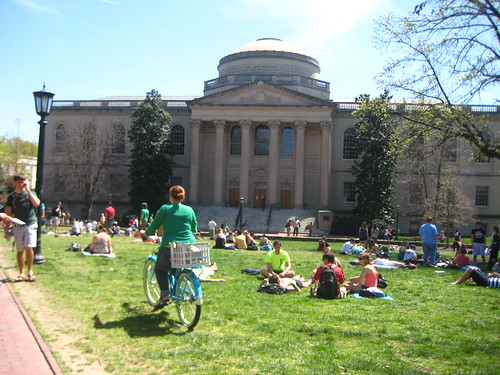
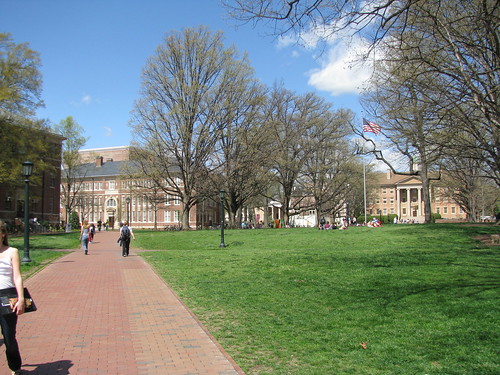
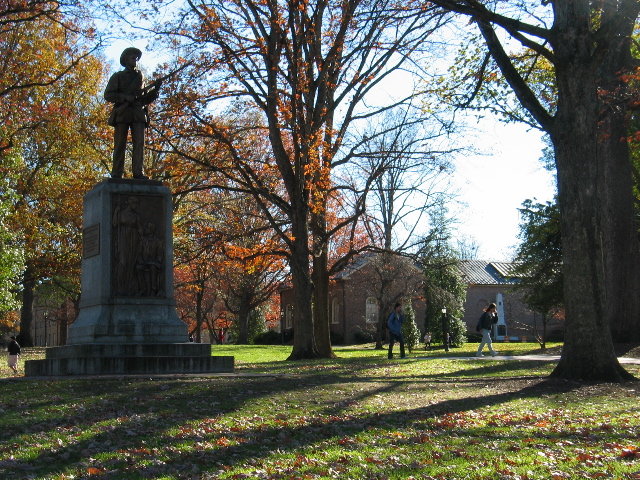
  1. UNC is like a historical town. It has so many beautiful buildings, stretches of green, and random quotes and statues to remind you to study so you will actually amount to something one day.

  2. I can't be offended when people make comments about my accent, because I love Southern accents so much it's probably weird. (“I love your acce-” “I LOVE YOUR ACCENT!”) It hasn't worn off even slightly as time has gone by.

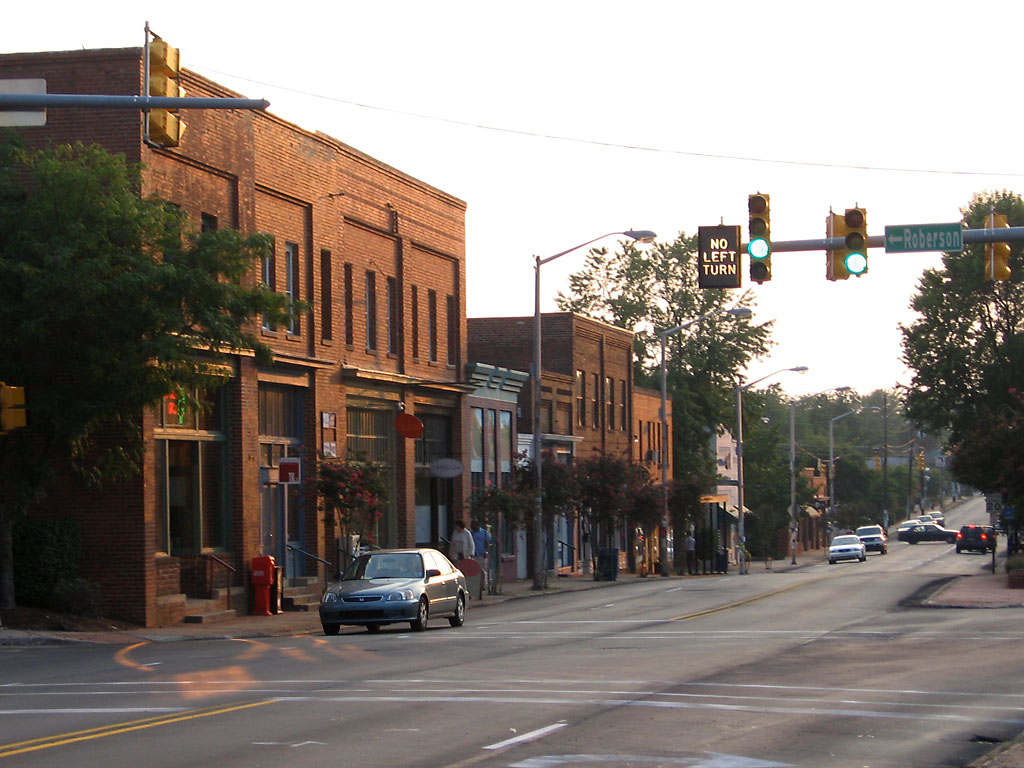
  3. Chapel Hill is considered to be one of the best places in the US for restaurants. It is a bit of a challenge to stay a size 10, but Weaver Street Market helps.

  4. This admittedly does backfire at times, but it's nice not to have to do a whole lot to get anyone's attention. Simply being from England makes me memorable and interesting.

  5. All of the professors I have had at UNC have been incredible academics, and incredible teachers. Not that I don't admire/borderline stalk the faculty of UEA as well, but attending another university has given me a wider perspective on teaching/learning methods. And made me even more sure that I want to be a professor myself.

  6. Carrboro. Running through Carrboro, wandering around aimlessly in Carrboro, spotting raccoons in Carrboro.

  7. Mountains to the West + beaches to the East = surrounded by perfection. Also, this is the best weather I have experienced in my life.

  8. After years of making excuses in order not to have to sit through football/cricket/rugby, I have finally found a sport I do like: basketball. Who would have guessed?

  9. I have made friends out here that I hope never to lose, and that is no small thing.

  10. Everyone has heard of William Faulkner.

It is a balmy 24C outside right now; sadly I am stuck in the library alternating between my dissertation proposal, reading for my classes, studying for a midterm and working on a paper. But I have Rooney to look forward to tomorrow night, and Spring Break is just around the corner.

As always, let me know if you have any questions about what it's like out here and I'll be happy to cover it on this blog!

Hellcats, the TV show that this entry's title comes from. Another thing I will miss once I go back!