Wednesday, 28 September 2011

It’s a dream, but there’s a real world waiting

Skype me!
Poor blog. I did sort of abandon you (again). In my defence, I also keep a regular journal and travel journal, then there’s my short stories to think about. And Facebook and Twitter and texting and emails… It’s easy to get distracted. I think back to when I used to write as a kid and it seems so much easier without all the technology. Don’t get me wrong, I still typed everything out (though thankfully my early stories, which read as something like a Last of the Mohicans-Friends hybrid – I know, hard to think how that would work, most likely because it didn’t – have long since disappeared into the ether) but I tended to just write for hours and nothing else. So I am blaming the internet for distracting me from my internet journal.

Since my last entry, I descended into finals madness, complete with dreadlocking hair, terrible outfits and the inability to eat and sleep regularly. It was NOT pretty. The effort that students put in at Carolina is inspiring, but honestly, I’m so happy to slump back to UEA and know I only have to go in two days a week. I like the independence of UK education. Fewer contact hours does feel like we’re getting cheated in some ways, but I much prefer getting to structure my own days, choosing what books I’m going to read, what topics I’m going to write about, when my deadlines are going to be. Sometimes at UEA it can feel like I’m drifting into empty space, nothing obstructing me but nothing guiding me. Carolina just felt like a circus. However, I jumped through the last set of hoops and packed up my things, then got on a plane headed to New Orleans.

Where shit gets really crazy. I recommend taking up yoga before you go, so that you can practise your cleansing breath for the moment(s) you think you're about to die.

 I would LOVE to bore you with every single great story from my travels, but I know that this is never fun for anyone else so I will restrain. Instead, have a list of everywhere that I went: New Orleans, LA; Austin, TX; Denver, CO; Park City, UT; San Francisco, CA; Los Angeles, CA; Laguna Niguel, CA; Washington D.C; New York City, NY; Nashville, TN; Memphis, TN; Oxford, MS; Wilmington, NC. If you plan to travel the US or are heading towards any of these places any time soon please feel free to get in touch. If you want to know where to go I’m going to give a big thumbs up to Austin and San Francisco in particular, but on a previous trip I fell in love with Boston, too. If you have lots of money you need to get rid of please take me with you. You would think that after three holidays, a month of travel on Amtrak, and a year of studying and travelling in the US I would never want to see it again, or at least want to go somewhere else. But what can I say? Despite all its craziness, America is a wonderful place to be. Actually, that’s probably BECAUSE of its craziness. (“If U do not pray God will B angry and U will go 2 Hell where U will burn”, for example. What an inviting sign to have outside a church. Snaps for Wilmington!)

It’s funny, during my year abroad I would constantly worry about how I could possibly respond to people’s questions once I returned home. I learned so much, had great experiences, made lifelong friends and was forced to truly stand on my own two mosquito-bitten feet. But it never felt as perfect or as easy as I thought it would. I don’t in any way regret my decisions, but to say that it was the best year of my life would be disingenuous. It was many things – eye-opening, inspiring, life-changing – but it was never easy, not for a single day. How do you explain all that when someone asks, “How was it?”? The truth is, I’ve not needed to. Other returning year abroad students have found the same; once you are home, people are really not massively interested in what you did whilst away from them. On the one hand it’s great, because I don’t need to attempt to explain things that others couldn’t possibly understand. (I don’t say this to be offensive, I just know that prior to my year abroad I could never have appreciated what these situations would be like.)

On the other hand, it is so difficult to be part of group conversations. I don’t want to bore people with year abroad stories, but how do you talk about yourself without ever mentioning the past YEAR of your life? If I talked purely about my life since returning home, it would be restricted purely to my new job at the Iron House restaurant, the millions of cupcakes I baked, and the fact that I’m nearly finished with Couch to 5k. This sounds like a lot, but… It’s not. If I want to mention being back at UEA, it feels a little strange right now because I’ve been on a year abroad. I’m working on my dissertation which I started on my year abroad. My friends Jess and Faye visited Norwich last weekend – I met them on my year abroad. Also, now you mention it, I got a new job because I left Starbucks to go on my year abroad, I started baking cupcakes because I tried so many on my year abroad, and Couch to 5k became highly necessarily after I ate everything in sight on my year abroad. So you see my predicament.

Aside from this, home is very good. The first couple of months were hard, as I tried to adjust to being back but with nothing being the same. Most of my UEA friends have graduated or left Norwich entirely, I live in a different house, and not to mention I am a fourth year. That sounds unbelievably old! But the positives do outweigh the negatives. After such an intensely difficult year at Carolina, I feel relieved to be somewhere familiar. And overall, I would say that I just feel… relaxed. When I left for Carolina about 13 months ago, I was a perfectionist to the end. I worried about everything, from my grades to my weight to other people’s opinions. Once you have failed a module, ceased to fit into your jeans and had everyone around you treat you like crap, a few slots down from perfect does not seem so bad. So long as I’m learning lots, am generally in good health and have a group of people around to eat my cupcakes I know I can and will be happy. Self-actualisation, all for the price of a plane ticket to America!

All that remains for me to say now is… What shall I do with this blog? I’m home now, after all, no longer in the Land of the Free. But I do have a few things still to come, I think. I am, of course, still an American Studies student, and writing a dissertation about the South. I also feel as though my dealings with America are far from over. At this point, I have no idea whether I will pursue American Studies in a postgraduate context or not. I don’t know if I will be able to work or study out there again. I do know that I will keep in touch with the incredible Americans who made me a welcome guest in their country. I will continue to think fondly of my experiences travelling. And take many more trips there again and again. 


Wednesday, 20 April 2011

"I believe that man will not merely endure: he will prevail. He is immortal, not because he alone among creatures has an inexhaustible voice, but because he has a soul, a spirit capable of compassion and sacrifice and endurance."

During my first year at UEA I took a module called Introduction to American Studies, which covered a large range of topics such as race, gender, religion, youth, etc., applying this to many aspects of American culture ranging from Native Americans to congress to television shows. In short, it got us to consider America's ideologies and the ways in which they influence the country as a whole. America and ideology go hand in hand, evidenced by how easy it is to name its oft-quoted values. What values can I name quickly that I think of as “American”? Freedom. Prosperity. Opportunity. Many other pleasing words. How about “British”? Er, well... I'm struggling – are you?* It's obviously not that Britain is devoid of values, nor that we aren't proud of our culture and heritage. But patriotism isn't quite so encouraged; in fact, announcing that one is proud to be British must almost always be followed with, “But I don't read The Daily Mail or anything!” Britain is tiny, yet our identity isn't as cohesive as America's, at first glance, appears to be.

(* Natasha Ross, UEA Community & Student Rights Officer-elect, via Facebook chat: “Hmm... British values... I have no idea.” I'm not alone!)

Let me first say this: America has always fascinated me, and I have an inexplicable love for a country that I never had an obvious connection to. Despite this, there are aspects of the culture I dislike. I have no idea who to blame for making me this way, but I hate Categories. Many of you have heard the real time, audio version of the rant that is about to appear so feel free to skip if you can't bear another go-round. We love to define other people's identities. We love to say, “That person is a theist/agnostic/atheist. That person is heterosexual/homosexual/bisexual/transsexual. That person is liberal/conservative.” I understand why this is obvious and in some circumstances, useful. But I get bothered by the extent to which people rely on these incredibly broad terms to skip out on appreciating individuality. I don't think it's out of line to suggest that some people look at the Categories before the person, and make judgements based on tick-boxes. Categories are more and more becoming a part of British culture (thanks, Prime Minister), but America is King of the “us/them” rhetoric.

Let's take a look at this:


Of course this is from a movie. Of course it is exaggerated. But I am constantly surprised at the degree to which this can translate to real life, and the way in which some people really and truly believe Categories are a beneficial way to look at others, whether in a comical way like Means Girls or in a way that has more serious repercussions. (Take a look at how Native Americans are still marginalised, particularly twentieth-century efforts towards assimilation. It’s heartbreaking.) At home I'm not sure all of my friends could tell you that I'm an agnostic, or what party I voted for in the last election. Here, I found that my religious/spiritual beliefs come up pretty quickly, and it's the first time I've ever been called “a liberal”. I'm obviously aware that my views can mostly be counted as liberal, but does this make me “a liberal”, an extension to my personality that I did not ask for or seek out? Obviously I can't avoid the association. But it feels like, for all my resistance of being categorised, of being part of a group, I can’t avoid being stereotyped either.

Growing up in England in a mostly white, middle-class town, I can’t say that I have ever been the subject of prejudice. I have never really had to deal with being stereotyped or judged for simply being who I am. (The only exception would be in telling someone I’m a feminist. Feminism is not misandry, it means believing in equal rights, friends.) I think I’ve already hinted at this in my previous posts, but America has been something else. On the whole, Chapel Hill is a great place to visit, and to live, but I was unlucky in the way I was treated at times. Sometimes people were rude to me in class, such as insisting that they couldn’t understand my accent at all. This stung at the time, but I know I’m not alone in that, and other international students have dealt with the same. What’s worse is the fact that some people just cannot get over the fact that I’m foreign. To them, I will never just be a person, or a woman, or a UNC student like them, because I’m foreign and therefore different. I’m sitting on the other side of the “us/them” table.

I know that this is not just America: being an exchange student must be hard wherever you go, and I think people tend to be more dismissive of those that will only be there a short amount of time, and dismissive of those they deem more effort to understand. It takes a certain kind of person to be curious about people from other cultures, and a certain kind of person to see that they’re more similar to you than they are different. Here’s the best part about my hardships in America: my dissertation topic struck me like lightning. I am going to be exploring the idea of empathy. Of course, my actual dissertation will be tailoring this to William Faulkner and Southern culture specifically (anyone get the reference in the title? Just me?), but it’s got me thinking about it more generally, too.

So here are, thus far, some of my thoughts on how empathy functions and what that means for cultural encounters. We grow up with the “us/them” rhetoric, with varying degrees of subtlety. It may be simply that our media is obsessed with the problems of immigration, that our schools naturally form cliques according to religion/race/class, or that we’re never really exposed to people outside of our own sect. Many people grow up believing – or being told by guardians – that others in the world are fundamentally different, incompatible for friendship, and even harmful to be around. Take, for example, if you are someone who is raised as part of religious sect where any non-believers are considered the dangerous “other”. If or when you encounter someone of that sort, your sense of empathy for that person may well be small or non-existent. You can rationalise it that they are not deserving of your kindness or notice because they are different from you, living an immoral lifestyle, fundamentally wrong.

I’m pushing it to an extreme example, but hopefully this process is helpful in considering prejudice, whether for race, religion, sexual orientation, gender, etc. I’m not sure to what extent empathy is natural, and to what extent it is learned. I have always been an empathetic person – I would say uncontrollably so. I’ve grown up writing, which is an activity that demands of you to get inside other people’s heads. (Fun fact: far from being socially strange bookworms, those who read fiction are more likely to have close relationships. Reading develops your ability to empathise with others!) Even when I am angry at someone, I automatically start considering their viewpoint too, wondering how they see a situation differently to me. In some ways, being empathetic is a good thing; I’m probably more reasonable for it. In other ways, it sucks. I take on other people’s emotions as if they’re contagious, and I feel compelled to help people even when they’re not nice to me. Some people view this as a weakness. I agree that I would definitely make a rubbish soldier, but this wimpishness is beneficial for my writing, right?

I seem to have rambled more even than usual, so let’s movie trailer conclude: Categories, assimilation, us/them rhetoric… This forms a cohesive, mainstream identity for a country, which is both wonderful and harmful. You could argue that it brings people together, but it also makes those who do not measure up to the ideal feel inadequate. And as for empathy… It also promotes the idea that there is a “right” way to be, when we’re actually all so individual that it’s impossible. It gives us the excuse to judge those who are different, to deem them unworthy of our empathy (if we are empathetic people in the first place – as far as I know so far, some people barely have the ability at all). As you can probably tell… I’m struggling to write a decent conclusion, partly because all my final papers are on my mind! I may have to return to these ideas later, when my research is further along. In the meantime, I’ll leave you with a much better writer than myself:

“It's so important for us all to be ourselves, warts and all, even though you might be considered a bit odd. We're programmed to conform from a very early age, which restricts us and causes more tensions than it relieves. We're encouraged to suppress the subconscious and beware of imagination because it's destructive to the behaviour codes we've developed. So most people lead fairly boring, monotonous lives and a jester in society becomes quite a privileged figure. But there's a jester in all of us and it should be encouraged.” 

(Probably my favourite non-conformist alive today. Michael Palin interview, Radio Times, 15-21 April 1995, pp 17-20.)

"You've got to think for yourselves! You're all individuals!" "... I'm not."

Friday, 18 February 2011

Positive outcomes only!

I thought my most recent entry required a follow up. I realise I sounded rather negative about being out here, and this could be off-putting for anyone planning to go travelling/planning to study abroad/planning to speak to me ever again. Therefore, I thought I would outline the main reasons some parts of the experience sucked, to demonstrate how freakish and unlikely these events were. (If they ever happen to YOU abroad, I will buy you a drink.) Then, hand on my heart and booming out the the Star-Spangled Banner, I will tell you just some of the things that I love.

Things that Sucked At The Time but are Now Told As Party Anecdotes:

a) North Carolina has a lot of bloodthirsty insects. I am allergic to insect bites. Much of my first week here was spent in bed, having feverish nightmares; I was in no way calmed every time I woke up to see my ballooning limbs. I feel somewhat guilty listing this, since two of my family have actually had Malaria, but it was scary!

b) When I say bed, this is a rather loose term... My room came unfurnished, and whilst I waited for a bed to arrive, I slept on a “wafffer-theen” mattress on the floor. When the bed finally arrived two months in, some of the parts were broken. I sent away from more parts, which took another six weeks. These were broken too. Finally I abandoned this whole bed thing and bought a futon on Craigslist, which has been fine except... it's bent and slowly breaking. It's propped up with books and does me fine, but I will probably weep with happiness when I get to sleep in an actual bed again.

c) No one had really explained to me the differences between the American university system vs. the British one. So I picked a combination of classes that didn't work together at all. I won't bore you with the details, but let's just say if I had wanted to actually do all of the reading in order to actually do all my assignments/tests with a hint of comprehension, I would have to have my head in books at least six hours a day. Then work on essays. Needless to say, the whole semester was like those nightmares I used to have at the beginning of sixth form, where I had to sit my A-Level exams already. Tellingly, I did have quite a few bad dreams about A-Levels out here...

d) North Carolina law mandates that liquor can only be sold in licensed ABC stores, which are only reachable by car. You want to talk about illegal activity? HOW IS IT NOT A CRIMINAL OFFENSE TO DENY A BRITISH PERSON OF GIN & TONICS? I mean, I made up for it with beer and wine, but it's really not the same.

And now... Things That I Like and Don't Want To Leave:

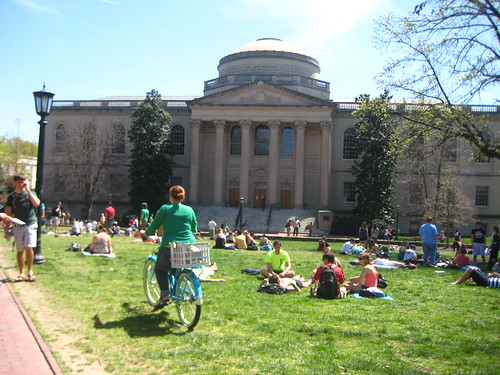
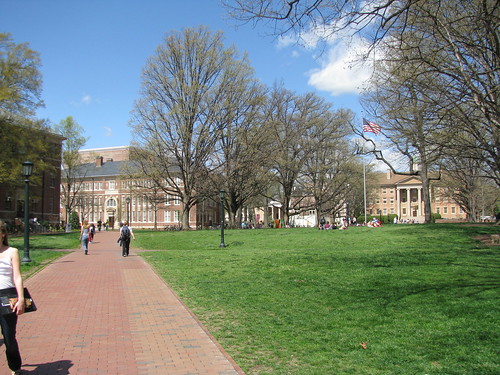
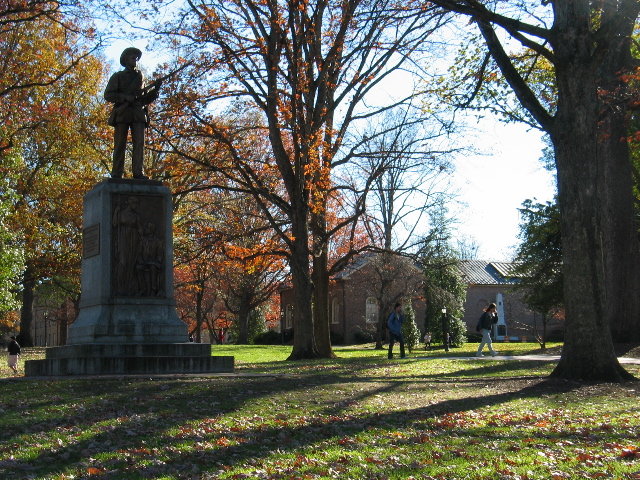
  1. UNC is like a historical town. It has so many beautiful buildings, stretches of green, and random quotes and statues to remind you to study so you will actually amount to something one day.

  2. I can't be offended when people make comments about my accent, because I love Southern accents so much it's probably weird. (“I love your acce-” “I LOVE YOUR ACCENT!”) It hasn't worn off even slightly as time has gone by.

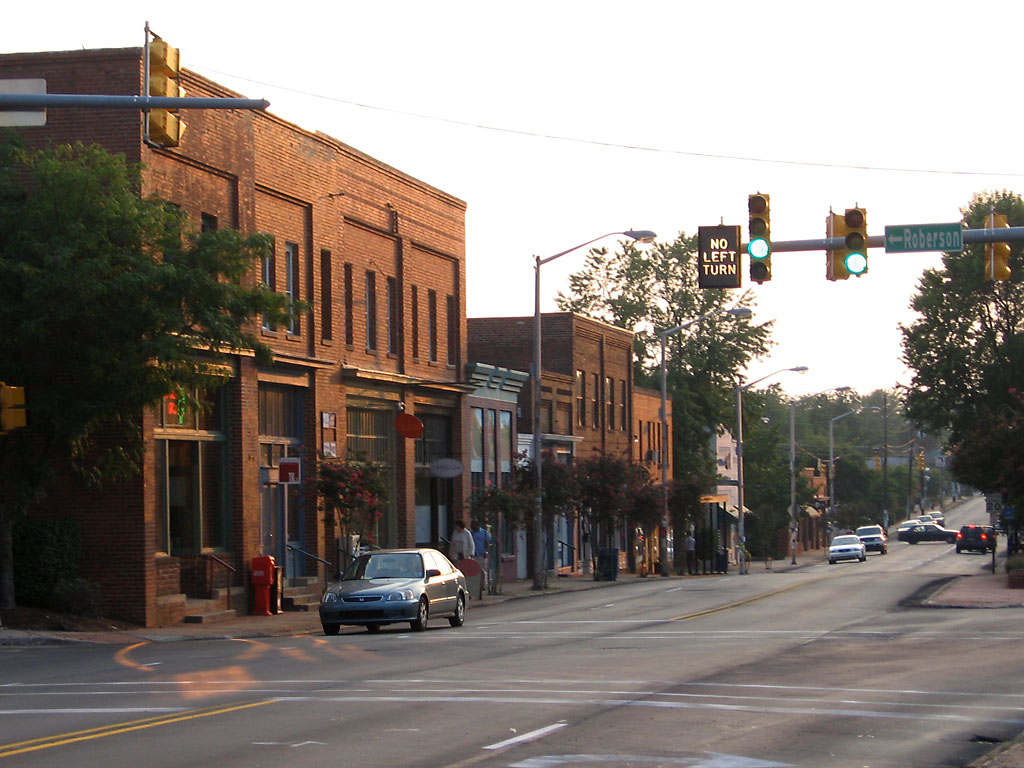
  3. Chapel Hill is considered to be one of the best places in the US for restaurants. It is a bit of a challenge to stay a size 10, but Weaver Street Market helps.

  4. This admittedly does backfire at times, but it's nice not to have to do a whole lot to get anyone's attention. Simply being from England makes me memorable and interesting.

  5. All of the professors I have had at UNC have been incredible academics, and incredible teachers. Not that I don't admire/borderline stalk the faculty of UEA as well, but attending another university has given me a wider perspective on teaching/learning methods. And made me even more sure that I want to be a professor myself.

  6. Carrboro. Running through Carrboro, wandering around aimlessly in Carrboro, spotting raccoons in Carrboro.

  7. Mountains to the West + beaches to the East = surrounded by perfection. Also, this is the best weather I have experienced in my life.

  8. After years of making excuses in order not to have to sit through football/cricket/rugby, I have finally found a sport I do like: basketball. Who would have guessed?

  9. I have made friends out here that I hope never to lose, and that is no small thing.

  10. Everyone has heard of William Faulkner.

It is a balmy 24C outside right now; sadly I am stuck in the library alternating between my dissertation proposal, reading for my classes, studying for a midterm and working on a paper. But I have Rooney to look forward to tomorrow night, and Spring Break is just around the corner.

As always, let me know if you have any questions about what it's like out here and I'll be happy to cover it on this blog!

Hellcats, the TV show that this entry's title comes from. Another thing I will miss once I go back!

Thursday, 17 February 2011

The Living is (not so) Easy

It may surprise you to know that, rather than just having forgotten about this blog due to having Super Happy Fun times at UNC, this is the fourth time that I've started an entry since I last posted. There are many topics I want to post about, but getting started has been an issue. I like to write entries that are at least somewhat cohesive and have a clear line of thought. In fact, that's how I like my life to be too. But America has been nothing if not baffling, so I suppose that's why whenever I sat down to write I ended up with a jumble of emotion and poor syntax.

I had a wonderful Winter Break, beginning in Washington DC in which I visited museums, procured new clothes and caught up with old friends. Then I went to Charlotte, NC to spend Christmas with a friend's family, then back to Chapel Hill for the remaining time with a stint in the mountains too. It was relaxing. Several moments brought me back to who I used to be, whether that was in a hostel in the capital, during long conversations about politics or whilst drinking cup after cup of tea. It's strange how I feel so far apart from who I was back in England. It's strange how it all happened. I have a stronger belief in the human capacity for change than most people – that is, I don't think our personalities are as static as most people seem to – and yet I was unprepared for the course my life took out here. I expected America to be fun, and any potential difficulties I simply glossed over in my mind as being things that would “make me stronger”, whatever that means.

It says a lot about our perception of America, I think. If I was going to study abroad somewhere that isn't a Western country, say Japan, or Kenya, everyone would be in agreement that there would be a big culture shock and that it would take some getting used to. Even in the case of another European country, especially if there was a language barrier it would seem like a tough move. America doesn't have those connotations. For all the criticisms Europeans seem to have of the states, we also take it for granted that it would be easy to fit in here, that cultural adjustment would be minor, and that every day would be filled with something outrageously fun. At least, that's what I picked up from my own expectations, and the expectations others have had of me.

I've been in contact with a lot of people from home whilst out here. What's struck me as interesting is that people are surprised when I say I've found it difficult. Logically, it makes sense. I came to a foreign country by myself, with absolutely no one I'd ever met previously in the near vicinity. The majority of people I come into contact with are already established here, not necessarily looking to make new friends. There are similarities in our cultures, of course, but to say it's not different would be just plain wrong. I have interests which can transcend whatever country I happen to be in – books, music, etc – but I have no idea about TV shows we don't get in England, the local sports teams, or anyone they went to high school with. America is so much about what is current, whereas – let's be honest – I am usually a step behind.

I have a theory that if we were to draw up a list of year abroad placements, America would be considered the “easiest” option. (Maybe Australia, too, but it is further away!) In some ways, that makes it much harder. If I was crying over culture shock/homesickness whilst on placement in Jordan, I doubt anyone would question my feelings. That's not to say that America is a more difficult option, because having only lived abroad here, I have no point of comparison. It is to say that it's hard to answer, “What's so hard about it?”

There is such a huge pressure to be loving the lifestyle abroad, but, like a year at home, unhappy times are inevitable. Some weeks I did nothing but study, only instead of feeling satisfied as I do at UEA, I would wish I could have spent the time travelling. I was also easily frustrated with the work I was doing, which doesn't count towards my degree and is completely different to everything I've learnt all my life. Having such a limited amount of time here played right into my tendency to consider (okay, obsess over) “the road not taken”. I thought a lot about what I should have done last semester to make more friends, exactly when and how I should have asked for more help, even right down to whether I should never have tried to do this in the first place. America was supposed to be the time and place in which I made a million new friends, went to a million great parties, aced all of my assignments to reaffirm my own cleverness, worked out all the time because the gyms are free, travelled to all these wonderful places, and in between all that developed the Zen that was lacking from my life at home.

Well... No. But, I will say this: the positive elements appeared much later, and in unexpected forms. I have some excruciating memories from being out here, unhappy and alone and feeling like a social leper. I've definitely had some of the worst experiences of my life. I mentioned earlier the idea that all of this would “make me stronger”; I certainly didn't believe it at first. I went from being someone who was motivated, friendly, creative and positive to the complete opposite: withdrawn, sad and socially uneasy. It wasn't that I thought I would never recover, but I was incredibly ashamed of how, in my eyes, I had failed to achieve anything out here. I couldn't even pat myself on the back that it would all make me a better person some day, because it didn't feel like that at all. It felt like I was ten times weaker.

Now, I wish I could “do a 180” and tell you that it's all changed dramatically since last semester, that I suddenly fit in here, love every day, never feel homesick. This isn't the case. But, it certainly isn't torture to be here any more, and the mystical “make me stronger” idea is actually true. It didn't happen in the way I expected, and it probably isn't outwardly obvious. Being here, against so many things I didn't enjoy, gave me many things in return. It gave me greater compassion towards others; after so much indifference, I know how important kindness is. It gave me the ability to laugh at things I would normally have worried about, because they're inconsequential now. It gave me perspective on my home country and my regular life. It gave me an appreciation for comfort and familiarity. It gave me patience. There are things that it took away from me, too – I definitely am more cautious about doing new things than I ever was before – but I feel sure I will get these back in time, too.

I don't believe bad things automatically make us stronger, but I do believe they change us. We can choose how, though, and I think when the experience has been difficult it can often shape us in a more lasting way. I guess it's the difference between improving your appearance by getting a haircut vs. having a nose job... Okay, bad analogy. But you see what I mean. It's taken me six months to get to this point, but no part of me worries that I shouldn't have done it. I'm more addicted than ever to Southern culture, and I'm sure I will return here again and again. I've had so many experiences I would never have had otherwise, and, whether bad or good at the time, they all make excellent stories. The story of my year abroad as a whole is far from over, so check back soon for the next chapter.

One very beautiful reason to be grateful for this experience. Also surreal, since I spent my youth imagining these mountains in 'Last of the Mohicans' and 'Rip Van Winkle'.

Wednesday, 24 November 2010

A little less conversation

I started this blog in order to record and reflect upon my experiences with American culture, so it may surprise you how much I have been thinking about England. Occasionally people from home will try to fill me in on what public service the Conservatives have most recently done away with, since they personally can afford to go private and it's just tough luck for the rest of us. (We still have the NHS, right?) Or inform me that Prince William is now engaged to his girlfriend of an “ordinary middle-class family” who are worth millions. (I am sad to miss out on the bank holiday though.) As you can probably tell, I am a bit of a sensationalist media junkie, and though America may be in some ways a self-interested bubble, they have yet to block BBC News and the Guardian so I'm still keeping up! I especially enjoyed the news cycle of the Pope's visit – did he borrow George Bush's speechwriter for those comments? Anyway, aside from Have Your Say and Skype conversations, I have been thinking about English culture in general.

I think there is a lot that you can't know about your own country until you have lived elsewhere. Only once you have experienced an alternative culture can you make comparisons and draw (tentative) conclusions about what it means to be “British”. I know that there is a lot that I have picked up on about American culture that locals probably never question; there are also things about me which are strange here but perfectly normal at home. Obviously this is what my blog is all about: different expectations and customs that come from being raised with different values. I'd like to make some comparisons between my home and host countries regarding social attitudes, keeping in mind that a) this is based on personal experience alone and therefore somewhat anecdotal and b) I am really only talking about North Carolina vs. South East England. As Dumbledore would say, sometimes we have to make a choice between what is right and what is easy. He was probably talking about taking down Voldemort, but I think it works for not making generalisations as well.

Along with religion, racism and deep fried food, the South is commonly thought of as having a friendly community spirit. At a glance, people here are more friendly than in England. Cashiers smile and ask you how you're doing, people standing in line (queuing) behind you will ask what you're cooking tonight. Sometimes I can find this overwhelming because I'm not used to be talked to by strangers so much. Other times, it is a nice pick-me-up in my day; for instance, the baristas at my local Caribou know my name and like to ask me questions about England when I go in. So why are we not like this at home? Are English people just grumpy? Well, some of us probably are but I don't think that's the whole truth. I worked at Starbucks for a year, and part of the company's appeal is its customer service; we are instructed to smile, make conversation and generally take an interest in the customers. I know that this is something I have always liked about Starbucks, and part of why I enjoyed working there so much. But some people just do not like to be bothered. English people are incredibly reserved and private in comparison to other cultures I've experienced, and I'd be interested to know how this compares across countries. My quick Googling tells me conflicting information about how culture relates to shyness, so maybe I'll dig into that another time.

We may be reserved, but I don't think Britain is commonly perceived as being an unfriendly place. We just express ourselves differently due to different values. Since we like to respect others' privacy, we won't start badgering people we don't know in public. We will talk in quieter voices on the bus or in restaurants because we don't wish to be overheard by strangers. There is also, I think, an aversion to superficiality. Of course this depends massively on you as an individual, but I personally despise fake behaviour and will avoid dishonest people. As you can imagine, in a culture where it is polite to be friendly to everyone regardless of whether you know or care about them, it is much more difficult to decipher what is genuine and what is not. Of course people are superficial at home, too, but it is not such a way of life, so it tends to be done with more deliberation and even malice. I am definitely an upfront person – in fact, I've often been told I'm blunt. To me, dishonesty breeds dishonesty, and the most comfortable way to form relationships is to at least know that there's something real. I don't put on a show or play games, and I know that this is something those who are close to me appreciate. Unfortunately, it's not such a revered quality here.

I mentioned community spirit, and together with all the friendliness, it stands to reason that another stereotype of people here is that they are always helping each other. Actually, I haven't entirely found that to be the case. Like at home, it's not something you can make a sweeping statement about. Personally, I think I am a helpful person; I like to take care of other people and make them happy. I've always been taught to think of others and I try hard to be a good friend, but admittedly I have been frustrated many times by people who are self-centred. There isn't a great discrepancy that I notice between home and here on that front, it just depends on the person. However, I do find that people at UNC keep to themselves more. People are happy to study by themselves, work out by themselves, eat by themselves – things I considered group activities. Perhaps students here are more independent than at UEA, but I find with that comes a “not my problem” mentality. I see less evidence of people taking the initiative to help one another, which for me, being alone in a foreign country, has been extraordinarily hard.

Another difficulty is simply that I am from somewhere else, which is sometimes intimidating to Americans who have never left the US or even the South. I grew up close to London, am half-Irish, and as far as I am aware always had friends of different ethnic and cultural backgrounds. I think in England we also tend to be exposed to other cultures more due to the fact that other European countries are so accessible. (So I guess I am also saying that English people have even less of an excuse for being racist morons, but that doesn't stop some.) I have found that some people have no idea about England beyond stereotypes, and aren't keen to have a conversation with me; whether this is due to disinterest or a fear of causing offence I couldn't say. On the other hand, there are people who have travelled or lived elsewhere, or at least have an interest in other places, who are absolutely fine and just want to ask questions. Most people ask if I am enjoying my time at Carolina. There is a tremendous pride in being a “Tar Heel” (which deserves an entry in itself, so I won't talk about the crazy amount of merchandise available just yet), which is obviously fun to be a part of... Except, I'm not really. A community isn't a community without exclusivity, after all, and here, I am definitely an outsider. So whilst that community spirit does exist, you have to be part of the community in order to benefit.

Another aspect of the “community spirit” mentality is popularity. Some highly unscientific poking around on Facebook leads me to believe that most other British people I'm friends with have around 400-500 Facebook friends, whereas the Americans have 800-1000. Again, might be a privacy issue. Since I am unpopular, with only 350 or so friends, we should move swiftly on... Popularity is one of those concepts that we are all endlessly hooked on; you can tell by our TV shows. I like to go against the grain, but I don't particularly believe in having as many friends as possible. Unless I know everyone or have one other person to stick with me, I am uncomfortable in a large group of people. I prefer to socialise in smalls groups, and I'm not friends with anyone I would hate to be alone with. I don't think this is as much of a consideration here. I've met people who hate to go out unless they're with a large group of people looking to get equally crazy, and others who strictly classify themselves as people who don't party. There must be plenty of people who sit, like me, somewhere in the middle, but the dichotomy feels sharper than at home.

So what does it mean to socialise in a “British” way? Many things, of course, but the most noticeable difference to here is the role of conversation. If I had to nail it down, I would say that Americans like to be perceived as fun, whereas British people like to be perceived as clever. We discuss, debate, explain and commiserate. You can engage almost anyone if you pick the right subject (to those who visit the UK, start complaining about the weather and you'll fit right in). Our social activities are geared towards talking to each other, whether it's over a cup of tea at home or clustered together in a pub. Even in large clubs, for instance the Waterfront or Mercy in Norwich, there are places you can sit and talk to each other if you're not dancing or watching a band. In the American bars I've experienced so far, there are some places to sit but that's not exactly the point of going out; you could conceive of going to the pub with someone for a chat but probably not to a bar. I definitely prefer socialisation that centres around talking since I am so well-practiced at it (!), and I know I am unusual for here in that respect. People have pointed out that when I am asked an off-hand question, I will actually think about it and give a proper answer. It's automatic to me, but unusual for here.

Obviously the lack of conversation here has made my chatterbox nature come out in my writing instead... As always, let me know if you have any suggestions for topics I should write about here. I'm intending to conduct a couple of interviews and get some material to discuss the North/South divide, Greek life on campus, and also about the very different attitude to fashion. Tomorrow is Thanksgiving, and I am going to my friend Kristina's for dinner. Sadly I am spending the rest of the holiday preparing for midterms and finals, but the semester is almost over and I'm so glad. It's been a difficult few months, and I will probably refer to this term as “the disaster show” forever after – for reasons I will share in due course! I've got some good things coming up over winter break and some plans to make next semester more enjoyable, so for now it is just waiting it out. And passing my time playing Geography games on Sporcle. Do YOU know where Azerbaijan, Suriname or Swaziland are? I do. Good conversation starter, no?


Sunday, 31 October 2010

Welcome to “the land of big trucks and expanding guts.” (Cody Jones.)

I'm sorry for the lack of regularity where this blog is concerned. I've never forgotten about it, of course, but as any university student can attest, sometimes your weeks are so busy they positively fly past. It's often like you're trying to write an essay whilst caught up in a tornado. Anyway, a lot has been going on and I have plenty to write about. I visited the mountains in a place called Asheville, went to the North Carolina State Fair in Raleigh, experienced my first UNC football game and today is Halloween.

I also found out that, with my combination of modules, it will never be possible to complete all of my assigned reading. In that spirit of things, I got a D on a midterm and my grades started to slip all round. It's been hard to deal with; at home I was often top of my class and it's hard to cope, self-esteem wise, with struggling so much. The one thing I've realised is that a year out here is completely different to a year at home, in terms of what I'm trying to get out of it. Here, I don't have to like everything I learn, but being exposed to so many new teaching styles is invaluable experience if I ever become a lecturer myself. It's not to say that I'm not getting anything out of the classes here – they're excellent. I just can't give them the focus they need, and the style is so different. I excel at long essays with room for creativity and originality, but short answer questions and exams, not so much. The majority of what I'm learning is out of the classroom, and that's how it should be.

On the upside, I feel more confident about my writing than I have done in years. I've never wavered from wanting to become a writer. But being out here has made me doubt myself in all kinds of ways – that I can probably explain in more detail when I have hindsight on my side – just not about writing. If anything, being so isolated has reinforced that need to write, to find escapism, that was probably the reason I began in the first place. I have found other forms of escapism over the years, typical ones which are followed by apologies and de-tagging photos on Facebook. I have found more healthy ones, too, like working out and cooking. Yet writing is still the most central, most fundamental part of who I am and how I live. What's difficult about being an artist at this age, is when we have to transition from escaping to crafting. We write for others, not just ourselves. When I reached the end of my teenage years, I became shy of my writing, constantly comparing myself to others, from friends in the Creative Writing Society to Hemingway. I've reached more of a happy medium now. Writing is like any other art: very little about natural talent, and largely about practice and diligence. Whilst I have given more energy to crafting and improving, I'm happy that it still remains my escape, and if I like, it can still be something that is just for me.

I feel that the title I've given this entry is relevant because it references several topics I've gone over: Cody Jones is a former member of the CWS, an American, and was commenting on a Facebook status I wrote about all the American food I've enjoyed. Which brings me – finally! - around to the subject I was originally intending to write about. Food, not so glorious food. As anyone who has ever been alive for more than two years is probably aware, food is a large part of American culture. The more grease, the better. For a girl whose diet is comprised mainly of wholegrain, fresh produce and hippy stuff like tofu and beans, this was intimidating. It was probably one of the debilitating parts of the experience, but I seem to have found some solutions at last.

At the international orientation back in August, our advisor told us that Southern food was amazing, but to be careful how much we had. Someone also referenced food when talking to us about homesickness, along the lines of: “Sometimes when a student is sad they just sit in their room eating lots of chips and pizza... or they don't eat anything at all.” I did both. In the early days, sometimes I would eat practically nothing at all, because it was so stressful trying to find something to eat that I knew I would like. When every day is filled with unfamiliarity, you just want to have a meal that you know you will like the taste of. Even things that seemed the same, like cereal, often had added sugar or used spices we don't have at home. Then sometimes, I would just eat anything because I was too disorientated to care. Fast food places are everywhere, even on campus. We may criticise Americans for the obesity crisis, but I can say from experience, we have it a lot easier at home. In Norwich for example, I could have lunch at Pizza Hut or Nando's, but I know it would be wiser to go to Tesco and buy salad and some fruit. In Chapel Hill, take Tesco out of the equation and what do you do? There is the odd shop that sells fresh apples and bananas, but not many, and that is literally all that they have.

I decided against getting a meal plan on campus because they are jaw-droppingly expensive and don't have a large variety of healthy options. Besides, I love to cook and I have a decent kitchen in my house. The only problem was getting food. Now, the thing to explain here is that people here rely very little on public transport or walking, so it follows that a lot of things aren't accessible that way. Two of my housemates have cars, and will kindly drive me to get groceries when I need to. However, this still wasn't entirely a solution for me because I'm used to being able to go weekly in order to eat fresh fruit every day, and besides I will admit that I am stubbornly independent. American supermarkets have yet to start doing home delivery, and as much as I asked around, no one was too confident I would be able to walk to get fresh produce regularly like I wanted to. So I had occasional healthy days when I had been shopping recently, but mostly watched in horror as my body proceeded to show me how unhappy it was. My skin was pubescent and painful. My hair was dry and not as shiny. I had sore eyes, couldn't sleep properly and always felt sluggish. I gained weight. I tried making the best of things: walking a lot, drinking plenty of water, having a vigilant skin care regime. But the fact of the matter is, what we eat is so so important. I suspect I have a particularly sensitive system, because you can tell within a couple of days whether I've been eating right or not.

I knew where a couple of supermarkets were from driving there, so one day I decided to go ahead and walk, just to see if it was doable or not. And this is where my two months of struggling becomes very funny. I walked down the road for, oh, fifteen minutes, and immediately came across a wonderland. Weaver Street Market sells mostly organic and local produce, has hardly any frozen food, and everything is free-range. I'll make my point this way: there was about five different varieties of tofu. I think you see what I'm getting at. I thought it would be drastically expensive, but it was actually quite reasonable. I eat very little meat – which helps the budget – but I did buy fresh chicken. I've eaten nothing but frozen chicken for two months and the difference is staggering. I know which I prefer! It has been goodbye peanut butter sandwiches for lunch, hello potato salads. Anyway, having good food again has made me so much happier. Cooking is a kind of therapy for me, and eating is a social activity; my housemates and I are trying to make time for a group meal once a week. I also feel even more qualified to write healthy eating articles for Concrete next year, an idea that's been bouncing around in my head whilst I panic about my lack of work experience.

There is probably a lot more to say about North Carolina food that will crop up in due course: corndogs, Southern barbecues, Krispy Kreme burgers, frozen yoghurt and ice cream places, (savoury) biscuits and sweet tea. Despite what may seem like a negative angle in this entry, some of their food is really good. Or I'll put it this way: their “bad” food, is really, really good. Just so long as it's not my entire diet I'm happy eating it occasionally. And to answer another question that I am asked a lot: I don't see a lot of fat people. Why? Exercise. UNC is a sports-oriented university, all the exercise facilities are totally free, and people here take pride in looking good. They don't gorge on food all day every day just because it's there. If you think about it, a lot of British university students are incredibly unhealthy but not necessarily fat, so it should come as no surprise that I'm not seeing a lot of large people in a college town. On the one hand I am, as ever, jealous that I am someone who gains weight immediately after a bad week. On the other, if I didn't freak out about diet and exercise so much, I would probably never have taken such an interest in it, and y'all would not have had this entry to read.

And now, I shall leave you with the very best part of American cuisine. If you are ever in the states, go there immediately. I first had it back in 2007 during mine and Katharine's Amtrak trail, and it has remained my favourite restaurant ever since. Behold:

The Cheesecake Factory in Durham, NC.

Saturday, 25 September 2010

He was so learned that he could name a horse in nine languages; so ignorant that he bought a cow to ride on.

So... Wow. It's been almost a month since I wrote my last post. Please accept my apologies, but the explanation can be easily found within this post – because I am going to be writing about UNC, the classes, and the avalanche of a workload.

But first, a little update on the homesickness situation. Moving abroad to somewhere as beautiful, interesting and friendly as Chapel Hill is comparable to an ill-advised rebound. You know, logically, that you have upgraded. Your days together are filled with sunshine, everything is new and exciting, and you know that this is an experience you will never forget. But it is also hard to forget your ex, who helped you become the person you are today. You try to focus on the bad stuff: that time it snowed constantly and you had to wait outside for 45 minutes because the stupid 22 bus apparently had more pressing things to do than show up. The fact that you never know where you stand, like when your timetables are held back until the first day of term. (What am I supposed to do, be up and ready at 8.30am just in case there's a seminar at 9?) Anything to do with Prince of Wales road. Despite all this, your rebound isn't your ex, and Chapel Hill isn't Norwich. There are an infinite number of things that, objectively speaking, make UNC a better university than UEA. But UEA had me first, and it has my heart. With all that said, Chapel Hill is shaping up to be a good second home. We don't have a history together, sure, but I think we have a good chance at a future.

I have many things that I want to write about – and if there's anything you'd like to hear about too, I'm open to suggestions! – but for now... Academia. Wait, don't stop reading! There's weird stuff ahead. I promise.

Firstly, I suppose I should give some background to the American college system in comparison to England's. (Or to cover myself, I should point out that there are probably many discrepancies from university-to-university in both countries, so really my comparison is just between UEA and UNC.) At UEA, we are told how many modules we are allowed to take per semester, and our choices are usually limited to subjects relevant to our degrees. In America, the system is much wider. You don't go in necessarily knowing what you want to specialise (Major) in, and have until the end of your second year to decide. (NB: American degrees are typically 4 years in duration as opposed to the average 3 years in England.) I have to say, I think this is a great system; you get a wider education for longer and it means there's less hassle if you don't end up liking your subject as much as you thought. You can also choose how many credits to take per semester, so you are more in control of how you structure your degree. At the beginning of each semester, you can sign up for many classes and attend the first ones, then drop whatever doesn't suit you. How much do I wish we had this at home? It would definitely have saved me from Shakespeare.

The minimum amount of classes I'm required to take per semester is 4, but I tried out 5. The first of these was the History of Southern Music, which was situated in a place called the Love House & Hutchins Forum, right on the edge of campus. It really was like a little house, with a table and chairs on the porch, and books stacked up around the room. The professor, William Ferris, is originally from Mississippi; I had trouble concentrating because I was entranced for awhile by his accent. Am I the only foreigner who loves Southern accents? Probably. At the end of the class, he got out his guitar and sang, amongst other things, 'Baby Please Don't Go' and something by Elvis Presley. This was actually the class that I decided to drop. I didn't feel that it was designed for someone without prior knowledge, and I knew I would spend the entire semester struggling. I was sad, of course, as I love Southern Music.

The next class that I had was Intermediate Fiction Writing, for which I had to submit prior work in order to get into. (There's nothing more fun than trying to write a short story whilst moving house.) According to my personal journal, it was in this class that I laughed and smiled more than I had done since arriving. The instructor, Randall Kenan, was just nuts. We didn't have to do much in the way of writing. We wrote a short bio and listed our favourite movies, books, authors and food. Then, one by one, we had to go up to the blackboard, hand our bio to him, and draw a picture of a horse whilst he questioned us on something in our bio. I'm not kidding. When someone asked why we were drawing horses, he would respond, "You're such an inquisitive bunch. Because I say so." At the end of the class, he told us it was a tradition started by Jessie Rehder, and that each class he had made to do it had been a good class.

For this class, we are all to write three short stories. We went in reverse alphabetical order, so I only just handed in my own story. We have to both give a hard copy to Mr Kenan, and post a copy online for the entire class to read and critique. Then we talk about it in the next class. Needless to say, I occasionally think about what's coming for me Tuesday and feel ill. I've had some glorious fantasies about just not going, and not reading the comments online. But this, unfortunately, is a big part of being a writer: acknowledging the effect it has on your readers, whether good or bad. I am thoroughly enjoying this class: it might be my favourite class I have ever taken in my entire educational career. Critiquing other people's works has been almost as beneficial as the writing practice itself. The other project we have is to write several papers on a published author, and present our work to the class.

My two literature modules are the American Novel, and Nineteenth Century British Literature. Both have reading lists which are ready to kill me, but they are full of books I either love already or have always wanted to read. I make it sound like I am actually keeping up with the reading. I'm really not. SparkNotes is as much my best friend now as it has been since GCSE. In fact, I'm pretty sure if I ever went as far as a PhD – hell, if I became a lecturer myself – I would still check out SparkNotes and Wikipedia first. The main form of assessment for these classes is exams. This of course, has lead to a number of freak outs on my part, but midterms are actually nothing like our exams at home. You're sometimes given the questions beforehand and can use the book for clarification; the main stipulation is sticking to the time limit (an hour or an hour and a half usually). More than anything, the midterms encourage you to keep up with your reading (or in my case, be diligent when it comes to SparkNotes). They're a less pressurised form of testing than our short essays at home. Finals, on the other hand, may be another matter entirely, but I'll let you know come December.

My last class has caused me a decent amount of stress. Native American Activism, whilst coming under American Studies, is also a history and politics module. How much do I know about history and politics? I know to ask Tash about it. Which, actually, is what I've spent a lot of time doing. Anyway, there is a ton of reading for this class, as well as short assignments every week on top of the bigger assessments, such as short essays, presentations and a research project. I spent the first month convinced I was doomed to failure. But what I lack in general knowledge, I more than make up for in sheer stubbornness. And my fail-safe tactic of turning up, a little hysterical, to the teacher's office. It turns out I'm doing okay anyway, as the two assignments I got back were graded at 90 and 95, and my tutor, Dr. Cobb, thinks my presentation and contributions in class were promising. Plus, this is such an interesting experience that I could never get at home. The way we learn about American Indians (if, indeed, we ever learn about them at all) is so backward, and tied in with this idea that their issues – and they themselves – belong in the past. In some ways the class is intimidating for me: a good portion of the class has at least some Native heritage, and there is a large population in North Carolina anyway. It's been a purely academic interest to me at home, but now it is reshaping itself into something more real.

It's really true that in order to get a better understanding of the country you're studying, you have to go and live there. I've learned so much in the space of 5.5 weeks here that I could never have learnt out of books at home. Like, for instance, about food – which incidentally will most likely be my next blog topic.

And now, entirely irrelevantly, I will leave you a song that regularly erupts in my head when I hear someone particularly Southern:

Y'all need to hide ya kids, hide ya wife...

Take note.